
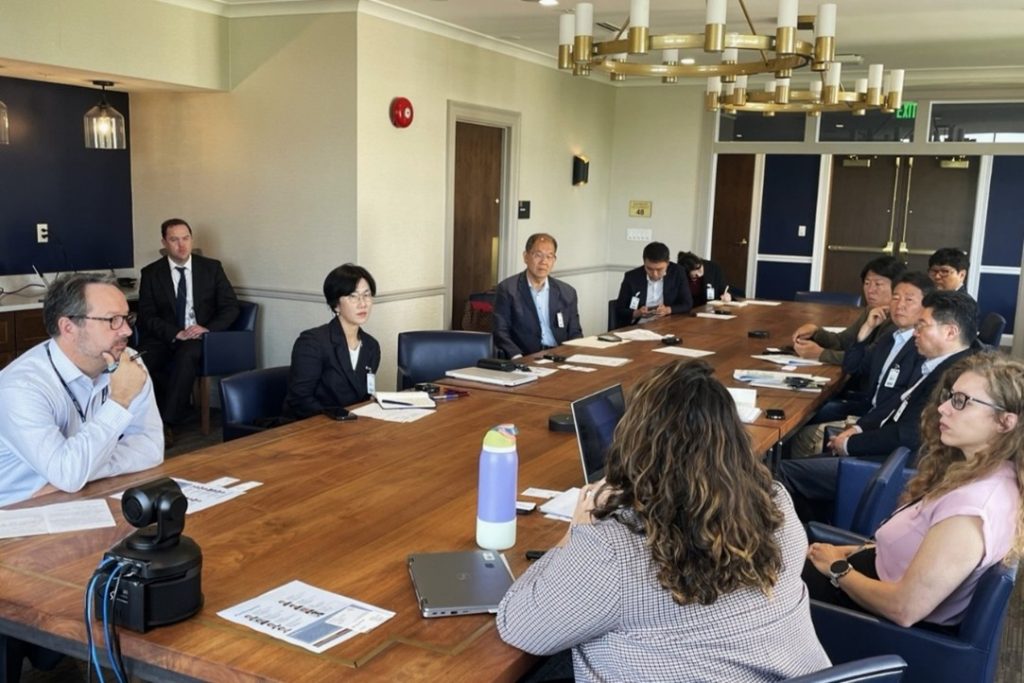
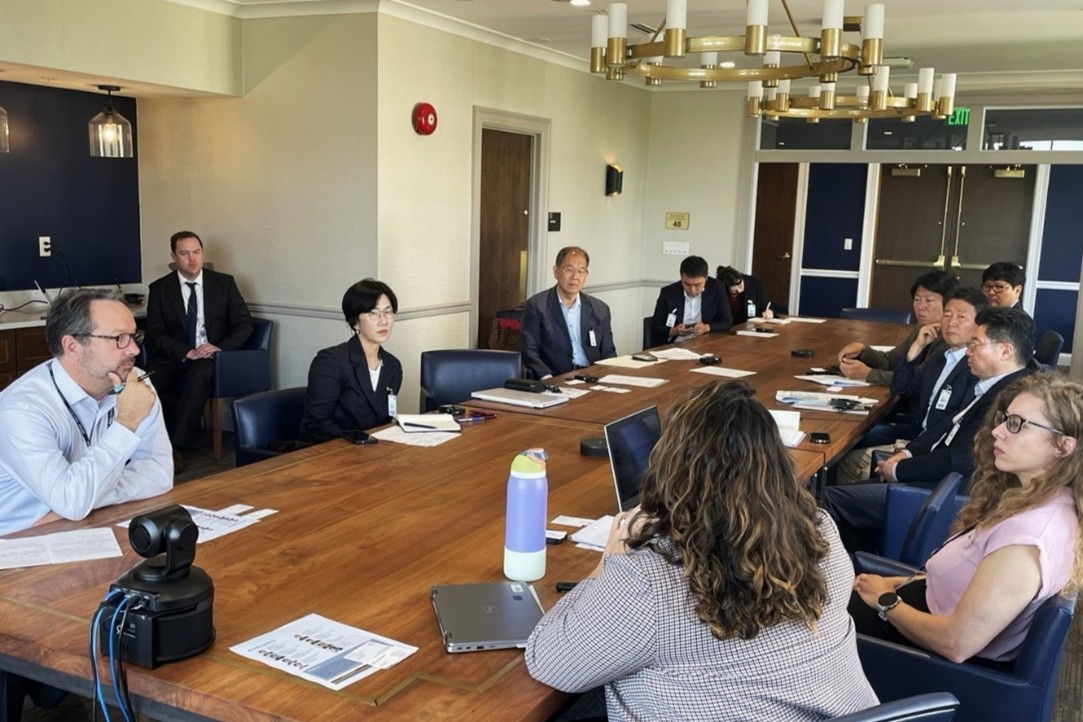
Last week, the U.S. Grains & BioProducts Council (USGBC) sponsored a South Korean biotechnology legislative advisory team comprised of Korean National Assembly staffers and biotechnology stakeholders to understand the U.S. regulatory system and tour the grain export value chain.
The program was designed to contribute to the introduction and improvement of Korea’s biotech crop review system, regulatory standards for genome-edited products and reasonable labeling systems in line with scientific and international standards.
“The Council is seeking to aid South Korea’s biotechnology review system and streamline the review process to prevent them from acting as non-tariff barriers to exporting high-quality U.S. grains to South Korea,” said Haksoo Kim, USGBC director in South Korea.
“Participants agreed that, through understanding U.S. biotechnology labeling regulations, the genetically modified food labeling system must adhere to scientific standards and operate without imposing economic burdens or misleading safety perceptions on producers, suppliers or consumers.”
The team arrived in Washington, D.C. and visited the U.S. Department of Agriculture (USDA) to meet with U.S. biotechnology regulatory agencies including the Animal and Plant Health Inspection Service (APHIS), the Food and Drug Administration (FDA) and the Environmental Protection Agency (EPA).
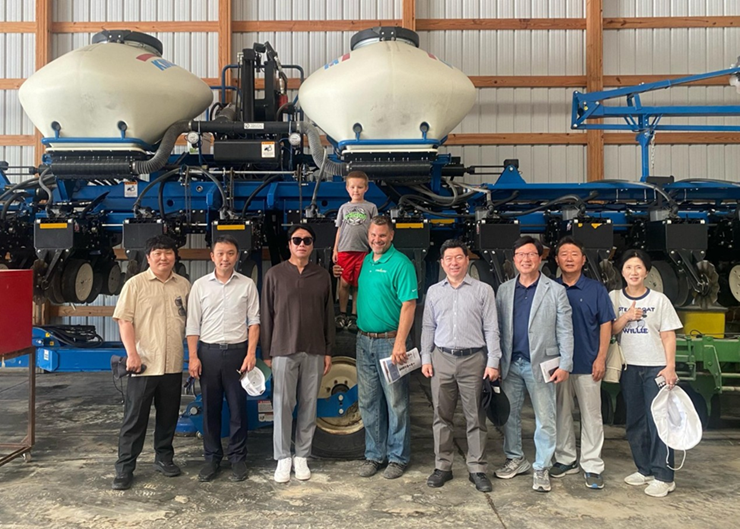
After continuing to Iowa, the group visited USGBC member Corteva’s Carver Research Center to learn about the state of global regulatory affairs and the latest scientific developments underway at the facility. Iowa Corn Growers Association Board Member Will Cannon then welcomed attendees to his farm to discuss precision farming and growers’ perception of biotechnology.
The program culminated in New Orleans, where Council members Blue Water Shipping and CHS hosted the team for deep dives into shipping logistics, quality control inspections and other administrative safeguards in place throughout the export process.
“Another message the Council hoped to convey to the Korean National Assembly through this program is that the U.S. is not only the safest and most competitive supplier of corn and other major grains with economies of scale, transparent quality management and ample supply capacity, but also is a crucial partner for Korea’s food security, which relies on imports for most of its major grains,” Kim said.
“Eliminating non-tariff barriers would greatly contribute to the development of trade and food security in both countries.”
Learn more about the Council’s work in South Korea here.