
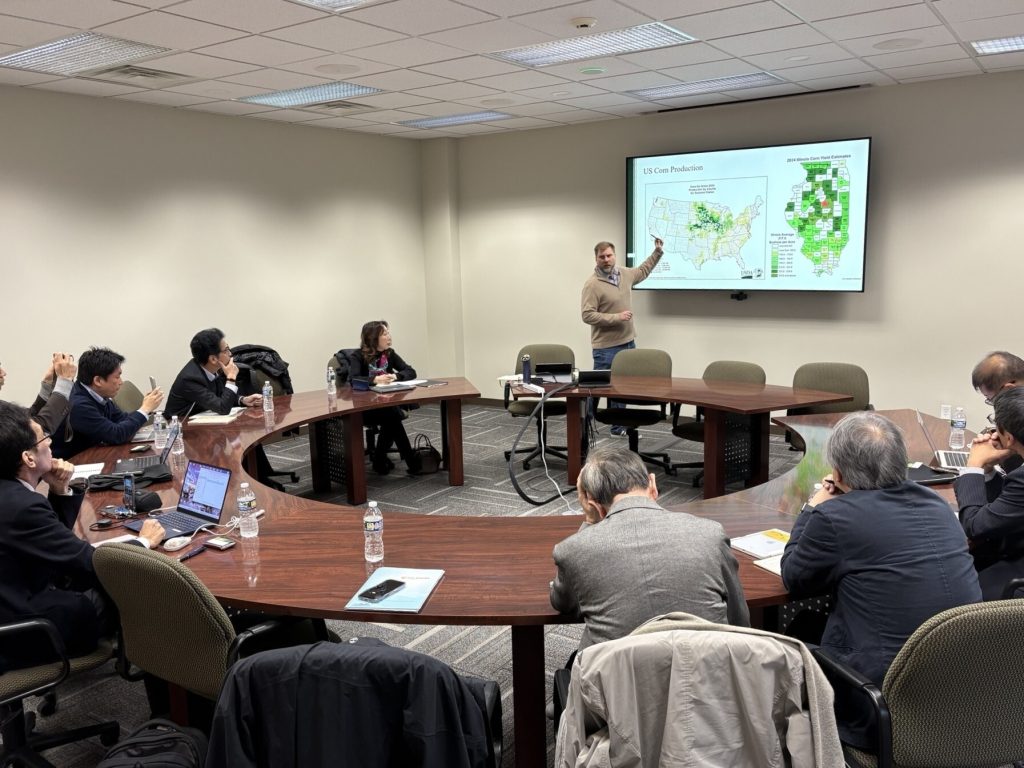
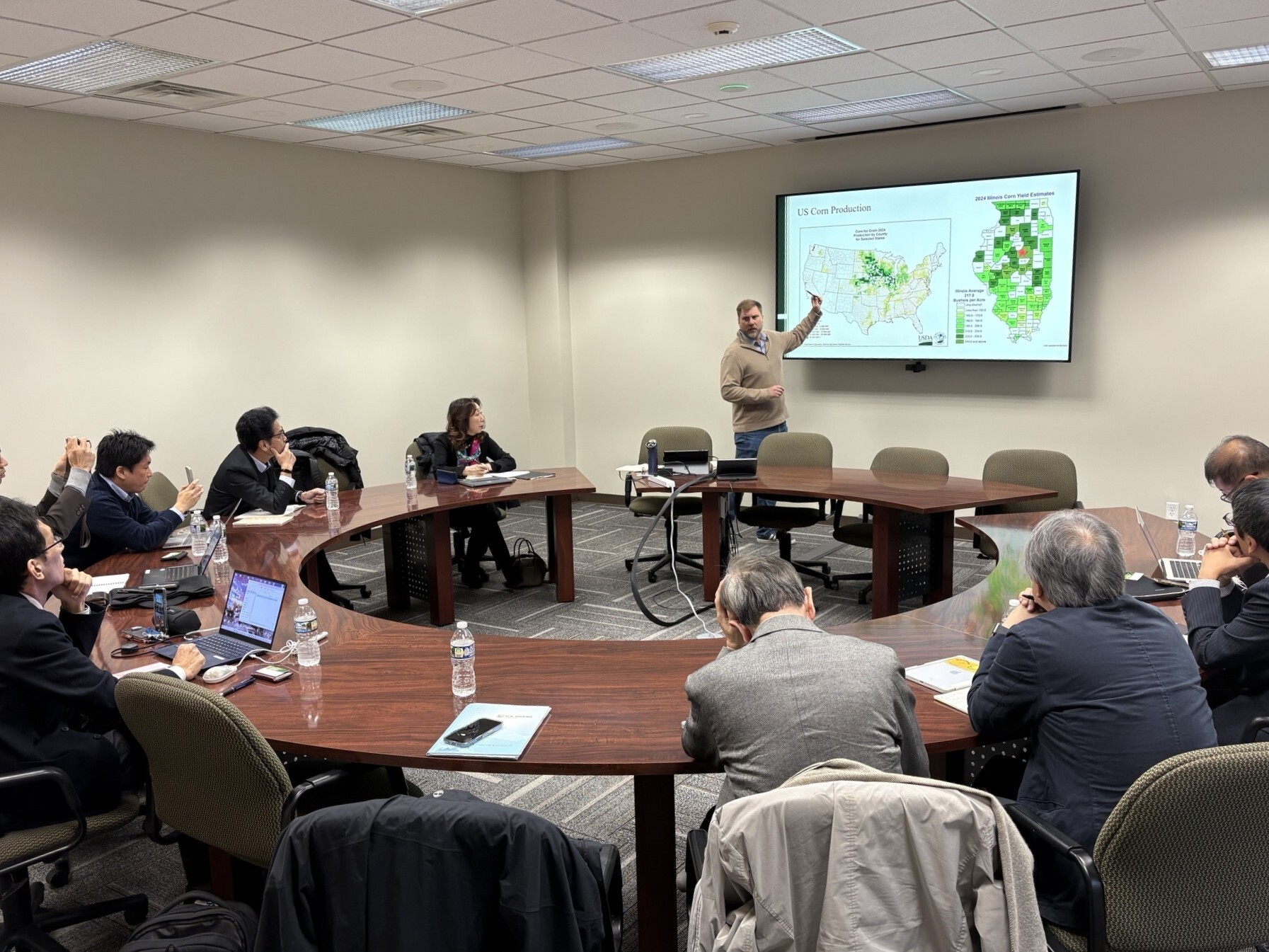
The U.S. Grains & BioProducts Council (USGBC) recently escorted reporters from weekly Japanese business journals and other influential outlets on a tour of the U.S. biofuel value chain, with a focus on ethanol’s application as a feedstock for sustainable aviation fuel (SAF) through alcohol-to-jet (ATJ) technology.
“Learning about production practices that reduce carbon intensity scores and government and state policies on enhancing use of U.S. corn bioethanol for SAF was of paramount interest for the team so they can share that information with consumers in Japan,” said Tommy Hamamoto, USGBC director in Japan.
The delegation of eight distinguished journalists arrived in Bismarck, ND, beginning their journey with an overview of standard corn growing practices at Direct Ag Farm. Following along the supply chain, they then toured a Gevo ethanol plant, a USGBC member, and spoke to staff about the process of turning feed into fuel.
The following day began with virtual meetings with USGBC SAF Consultant Mark Ingebretson and Argus, a global leader in market intelligence specializing in energy and other commodities, before heading to Illinois for the next phase of the agenda.
Representatives from Illinois Corn welcomed the group and spoke about the importance of checkoffs to U.S. farmers and how ethanol drives additional income streams for a wide range of agricultural stakeholders.
Later, the group met with representatives from One Earth Energy for additional insights into biofuel production and visited the University of Illinois-Chicago to better understand the latest research being done in the energy and transportation fields.
Finally, the team traveled to Washington, D.C. to visit the Council’s headquarters and meet with USGBC Director for Global Ethanol Export Development Alicia Koch, the Renewable Fuels Association (RFA) and Airlines for America to wrap up their experience.
“As Japan looks to expand its use of SAF, building consumer confidence will be critical to a successful adoption of bioethanol as a low carbon SAF feedstock,” Hamamoto said.
“The team members are now equipped with a better understanding of how U.S. corn is grown, and how U.S. bioethanol is refined with the highest standards of quality and environmental harmony to improve human health.”
Learn more about the Council’s work in Japan here.