
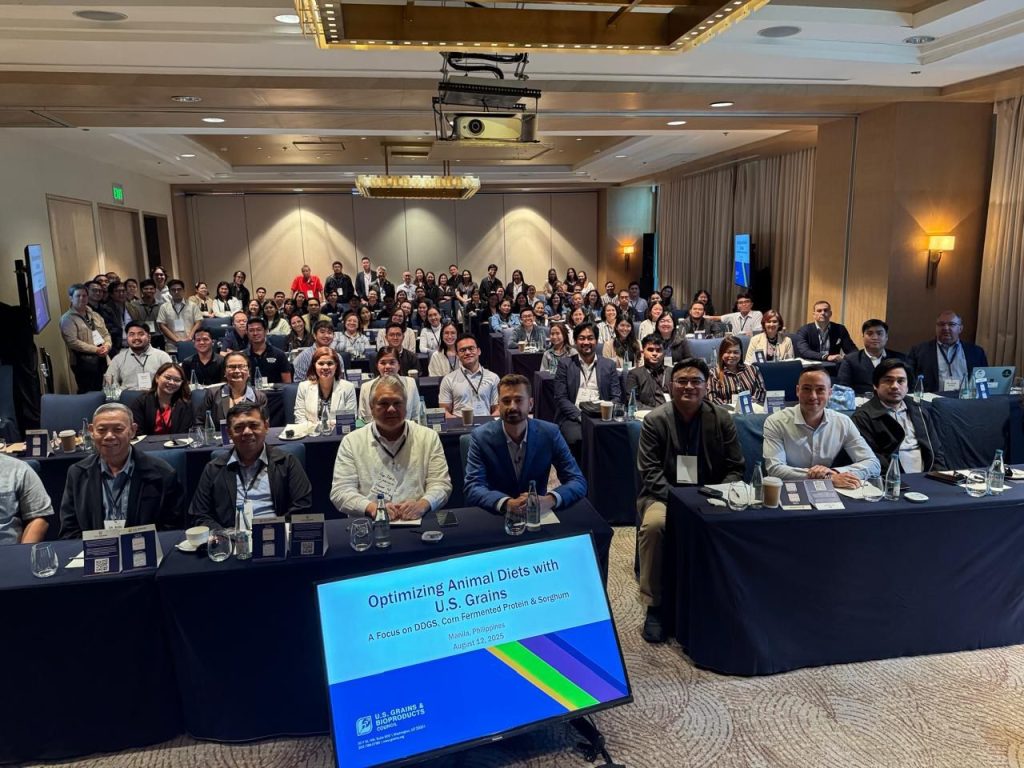
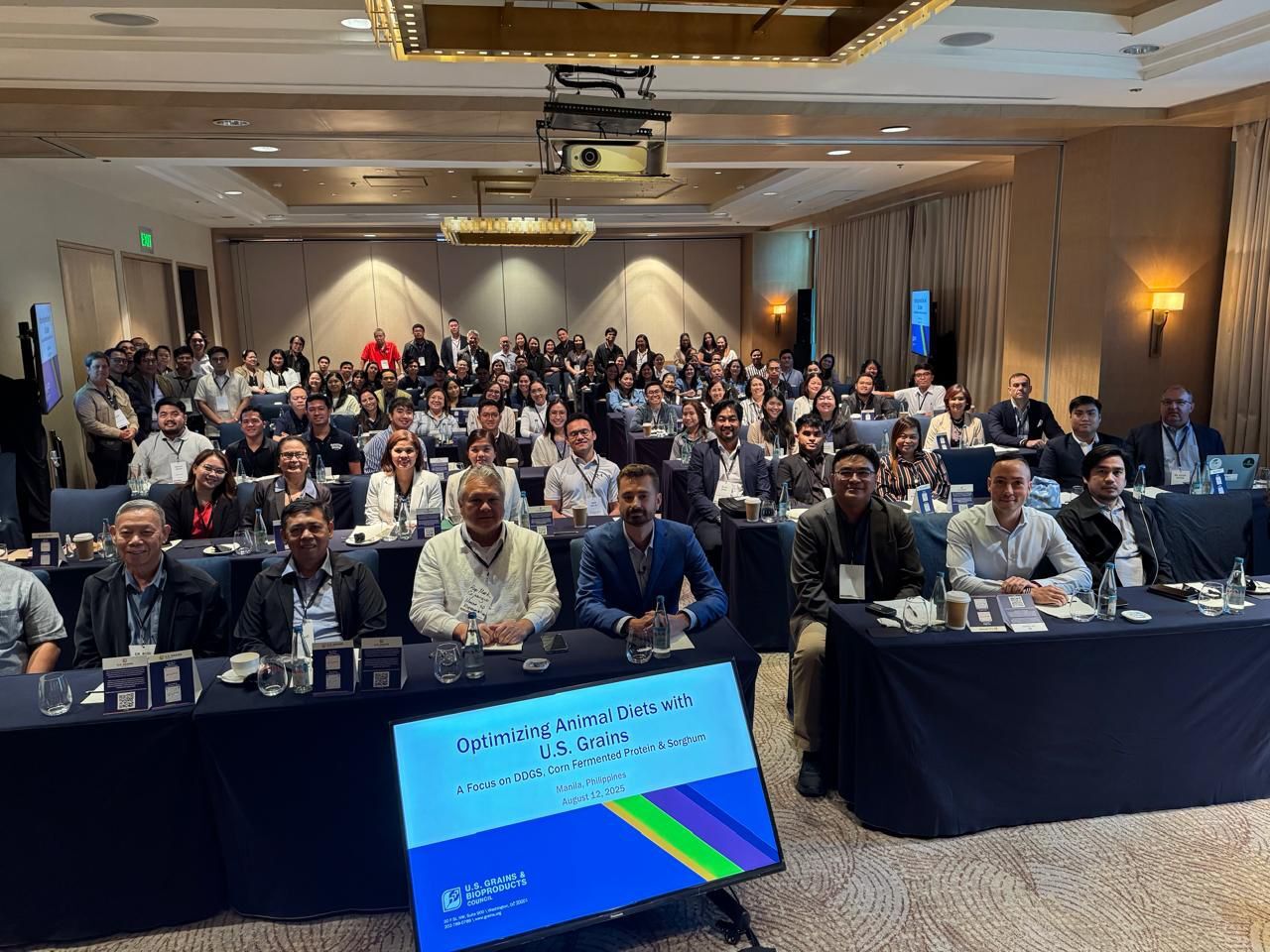
Last week, the U.S. Grains & BioProducts Council (USGBC) traveled across the Philippines to conduct technical seminars in Manila and Cebu for feed millers and importers and a workshop in Davao for local swine and poultry farmers to improve feed formulation strategies and provide advice on the logistics of sourcing U.S. commodities.
“As part of a rapidly growing region, the Council is hoping to deepen technical understanding and confidence among Filipino feed millers, nutritionists, importers and farmers in using sorghum, U.S. distiller’s dried grains with solubles (DDGS) and other corn co-products like corn fermented protein (CFP),” said Caleb Floss, USGBC regional trade manager.
“Expert-led sessions on feed efficiency and livestock, poultry, aqua and pet food nutrition will help position U.S. suppliers as reliable partners that can improve the productivity of end-users and their customers.”
At each stop on the roadshow, Dr. Scott Tilton of The Andersons, a USGBC member, spoke to attendees about the applications for DDGS and CFP in poultry, ruminant, swine and aquaculture diets. At the Manila seminar, Dr. Anne Huss, a nutritionist from Evolve Consulting Group, spoke about the benefits of DDGS, CFP and sorghum in pet food, a growing market segment in the Philippines.
Each location’s presentations also included best practices for DDGS storage and handling from USGBC Regional Technical Consultant Dr. Budi Tangendjaja, who demonstrated the value of DDGS through a feed formulation exercise. Floss then explained the importer and consumer benefits of the Council’s Corn Sustainability Assurance Protocol (CSAP), that certifies corn and corn co-product shipments as meeting specific standards for renewable production.
“The Philippines is a demographically young and fast-growing economy. In addition to traditional swine, poultry and aquaculture industries, there are burgeoning opportunities for dairy and pet food,” Floss said.
“It’s important for the Council to be engaging the local end-users through these roadshows throughout the country to develop a strong, wide base of demand for U.S. feed grain exports.”
Learn more about the Council’s work in the Philippines here.