
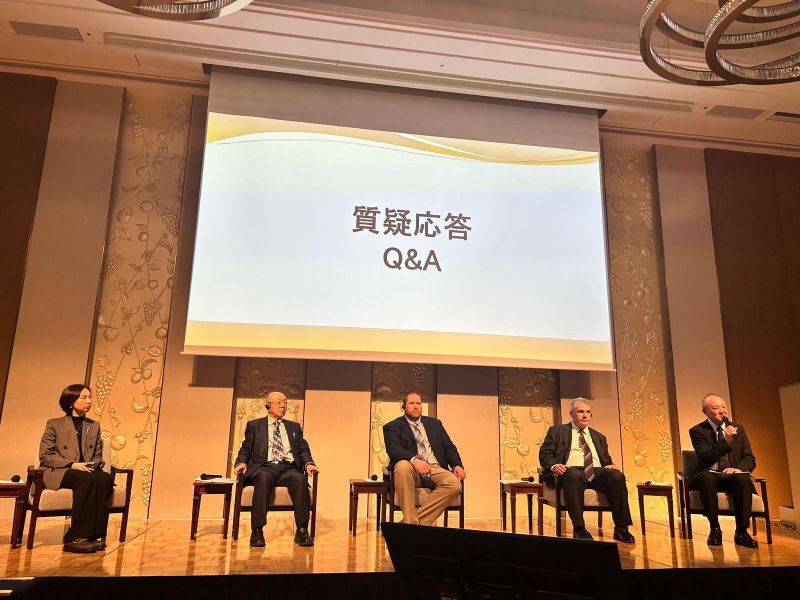
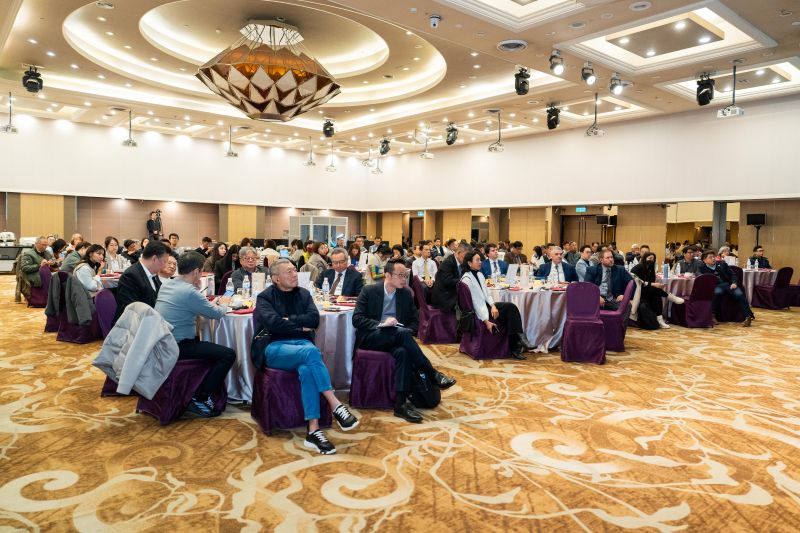
The U.S. Grains & BioProducts Council (USGBC) held conferences in Taipei, Taiwan and Tokyo, Japan last week to spotlight the Council’s 2025/2026 Corn Harvest Quality Report, a detailed analysis of the qualities and composition of the recent U.S. corn crop for international customers.
USGBC Vice President Cary Sifferath and Kansas Corn Commissioner Derek Belton attended the conferences to provide additional details for attendees.
“Not only do these rollout events provide information about the quality of U.S. corn at harvest, they also update attendees about the progress and developments of farming technologies on corn farms in the U.S. and the latest international grain market situations overall,” said Michael Lu, USGBC director in Taiwan.
“Local industrial stakeholders use these findings to inform their corn purchasing decisions, making them more confident in continuing to buy U.S. corn. The report compounds customer loyalty year over year.”
At both events, Sifferath reviewed the findings of the Council’s report and offered insights into recent global market shifts and updates on U.S. trade policies to best equip buyers to make the most informed decisions possible.
Belton gave his perspective on the 2025 U.S. corn crop and explained the newest technological advancements helping U.S. farmers produce better goods with lower input costs, an attractive prospect for many buyers.
Other meetings in both countries enhanced the reach of the Council’s mission, including the Taiwan Ethanol Technology and Policy Research Conference that provided feedback on Taiwan’s implementation of biofuels for on-road vehicles and airplanes.
In Japan, Sifferath, Belton and USGBC Director in Japan Tommy Hamamoto visited with Ministry of Agriculture, Forestry and Fisheries Vice Minister Yoichi Watanabe, who gave opening remarks at the event’s reception.
During his comments and during one-on-one discussions, Watanabe mentioned that Japan worked toward reaching $8 billion of U.S. agricultural imports per year by purchasing at least 90 percent of its corn from the U.S. in 2025.
You can read more about the Council’s work in promoting U.S. corn worldwide on the Council’s website.