
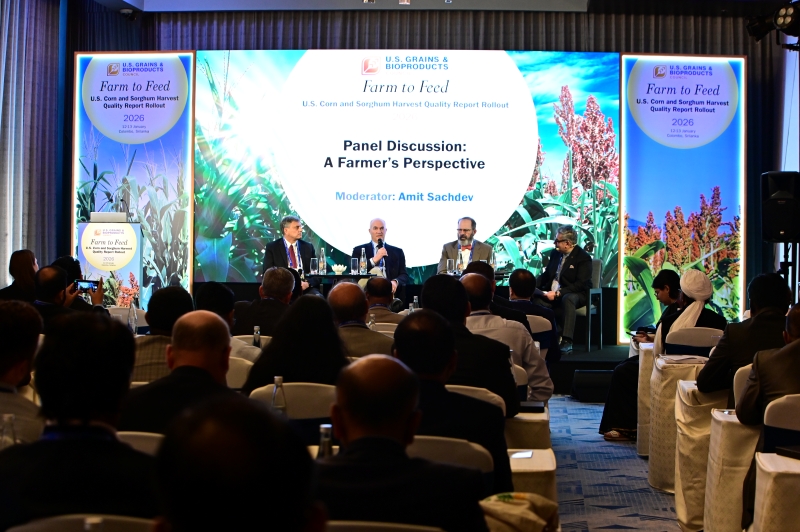
Last week, the U.S. Grains & BioProducts Council (USGBC) hosted a corn and sorghum quality rollout event in Colombo, Sri Lanka as a continued engagement with buyers in the region after Bangladesh recently imported U.S. corn for the first time in eight years.
“The vessel of corn that arrived in Bangladesh was a welcome sight for U.S. farmers and exporters,” said Reece Cannady, USGBC regional director for South Asia.
“In-country marketing efforts last July have paid dividends, as we are seeing unprecedented numbers of requests for U.S. corn following that engagement.”
More than 85 attendees, composed of buyers, end-users, U.S. sellers, U.S. farmers and staff from the U.S. Department of Agriculture and the U.S. Embassy in Colombo came together to hear the findings of the Council’s 2025/2026 Corn Harvest Quality Report and 2025/2026 Sorghum Harvest Quality Report and other updates about U.S. agricultural quality and availability.
The conference began with reviews of the reports, provided annually by the Council as a service to international importers for them to make the best decisions for their customers. Cannady spoke about U.S. corn’s superior performance when compared with competing origins and USGBC Regional Technical Consultant Dr. Budi Tangendjaja presented about DDGS and sorghum applications in poultry diets.
The next session included a roundtable discussion, moderated by USGBC South Asia Consultant Amit Sachdev, that explored farmers’ perspectives on the current corn and sorghum crops. Participants included Texas Grain Sorghum Producers Executive Director Wayne Cleveland, Kansas Corn Commission District Two Commissioner Dennis McNinch and Iowa Corn Growers Association President Mark Mueller.
A selection of U.S. agribusinesses and USGBC members, including The Andersons, International Feed, POET and Trans Globe then spoke to participants about their services before Kansas Corn Commission CEO Josh Roe offered closing remarks for the first day.
Cleveland kicked off the next morning’s session to expand on sorghum’s ability to efficiently add nutritional value to animal diets. Other topics included an overview of regional supply and demand for feed grains and sessions on improving output and efficiency in dairy, poultry and aquaculture production.
“The demand for feed grains in South Asia is strong, and the challenges faced are mainly in non-tariff trade barriers,” Cannady said.
“Considering the current regional supply and demand dynamics, it’s paramount the Council stay active and capitalize on these newfound opportunities. South Asian buyers are now able to see that procuring the world’s best agricultural products is a possibility, and we are excited to supply their needs.”
Learn more about the Council’s work in South Asia here.