
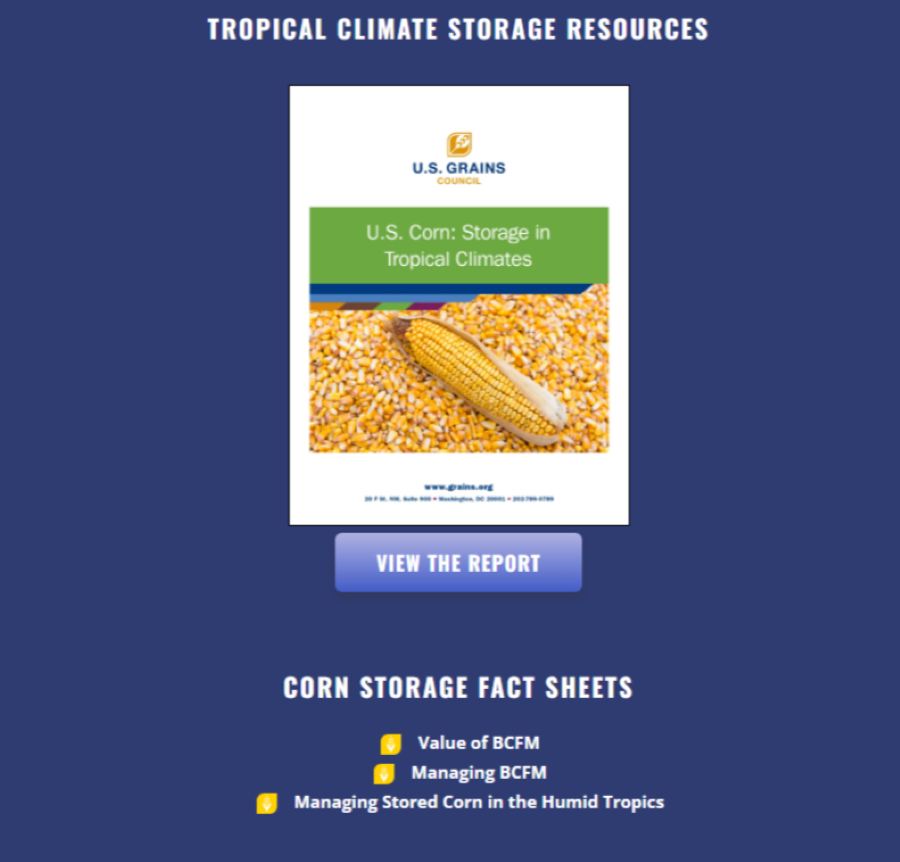
The U.S. Grains & BioProducts Council (USGBC), in collaboration with Purdue University, recently published fact sheets on the performance of U.S. corn in tropical climates and how to maximize the nutritional value of broken corn and foreign materials (BCFM).
“Despite tropical regions posing challenges for grain storage, these studies show imported U.S. corn can be effectively managed in warm, humid climates,” said Kurt Shultz, USGBC senior director of global strategies.
“The results were gathered over two years of research and analysis to help end-users and importers develop strategies to manage U.S. corn, strengthening U.S. growers’ competitiveness in key markets around the world.”
Information gathered from the study includes findings that aeration in humid tropical climates requires managing moisture rather than temperature alone, as high relative humidity coupled with high temperatures are the primary drivers of grain deterioration.
Seasonal variations dictate the timing and duration of aeration, with short windows of two to four hours still being beneficial to reduce moisture migration, high relative humidity levels/moisture condensation in the headspace and CO₂ accumulation.
The results from the two-year storage study in southern Mexico’s humid tropical climate show that although BCFM has 98 percent of the nutritional value to whole corn, it is more fragile and prone to deterioration than whole corn, so end users need to develop strategies that utilize the BCFM immediately rather than putting it into long-term storage.
Screening BCFM from corn at reception helps maintain overall grain quality and improves its storability by four times, but the screened fraction must be used promptly to maximize its nutritional value.
Effective management requires a combination of BCFM screening, continuous monitoring of storage conditions and timely inventory turnover. These practices are the most reliable strategies for reducing spoilage and aflatoxin risks in warm, humid climates.
You can read these reports and more in their entirety on the Council’s website.