
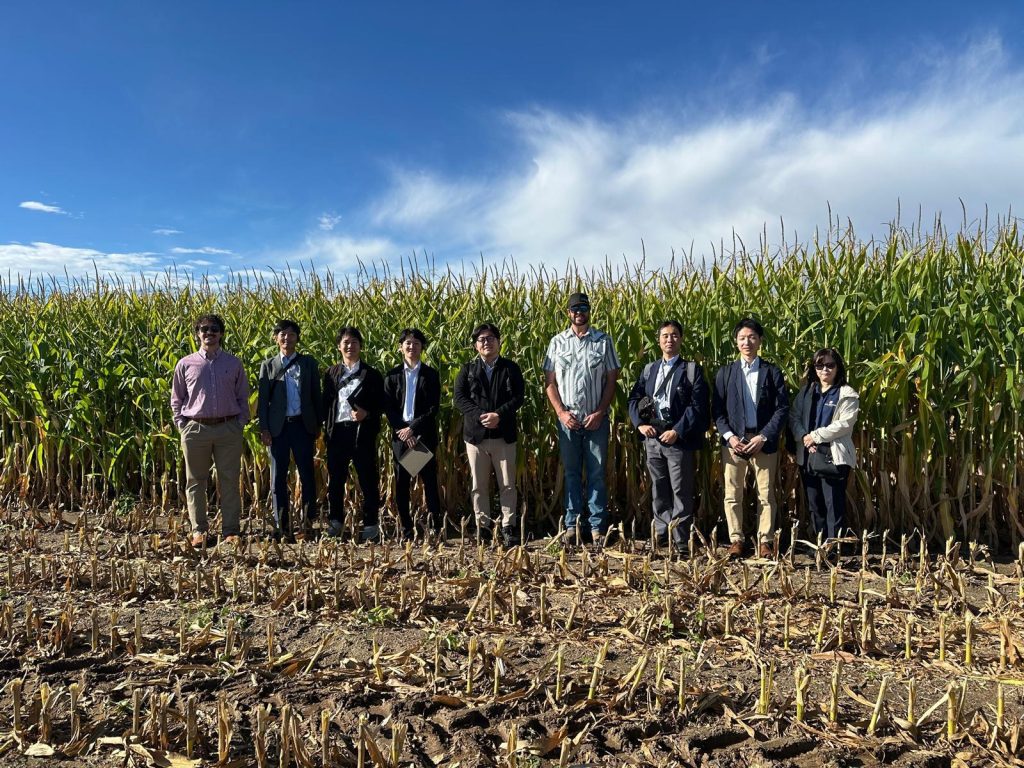
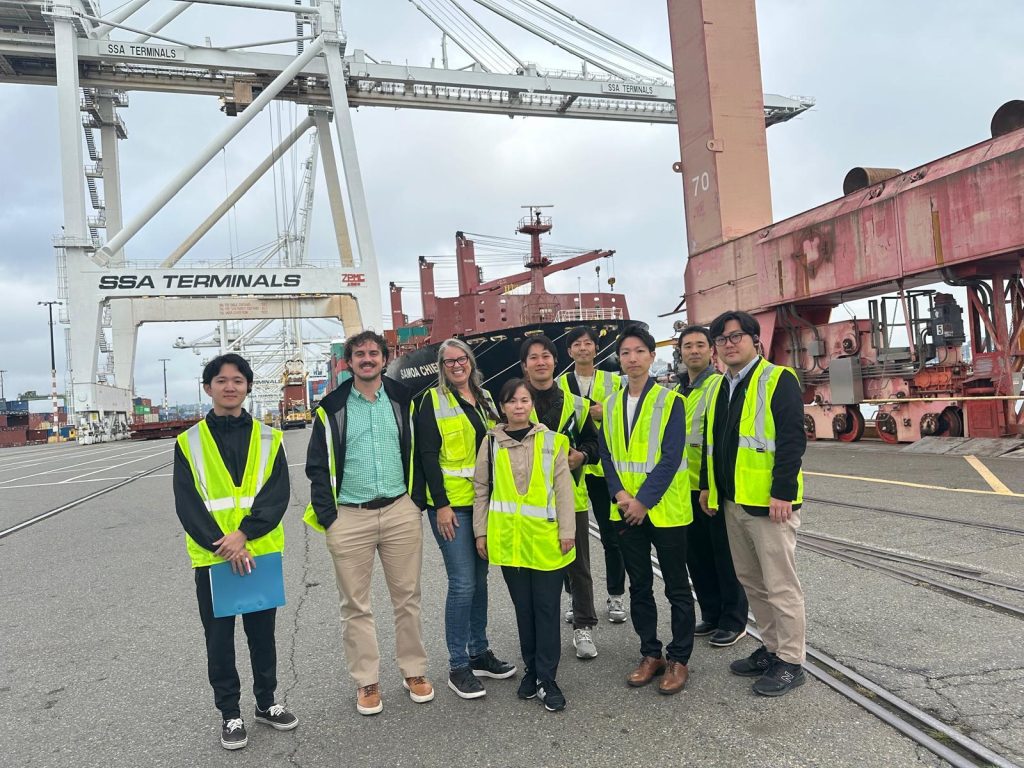
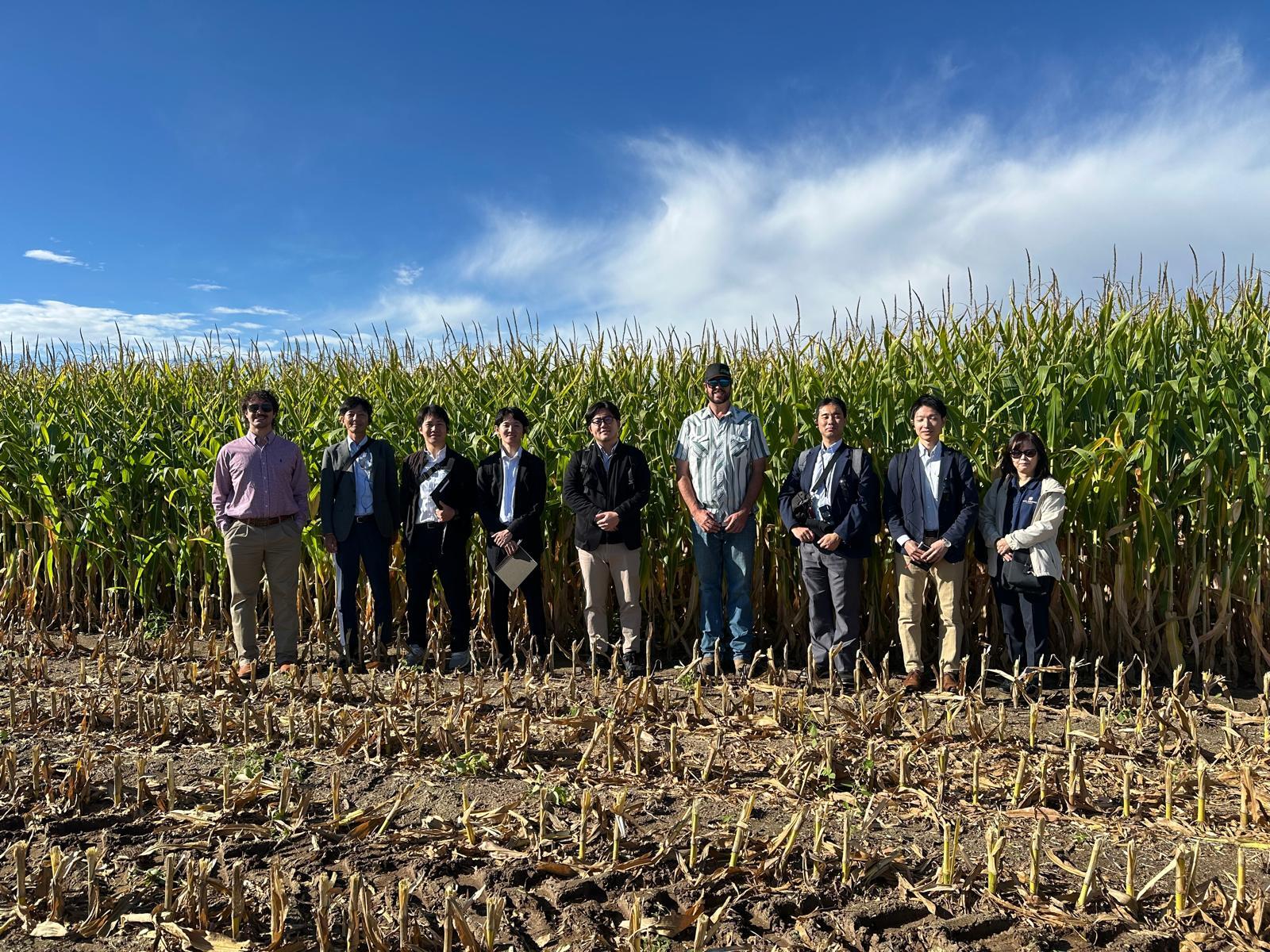
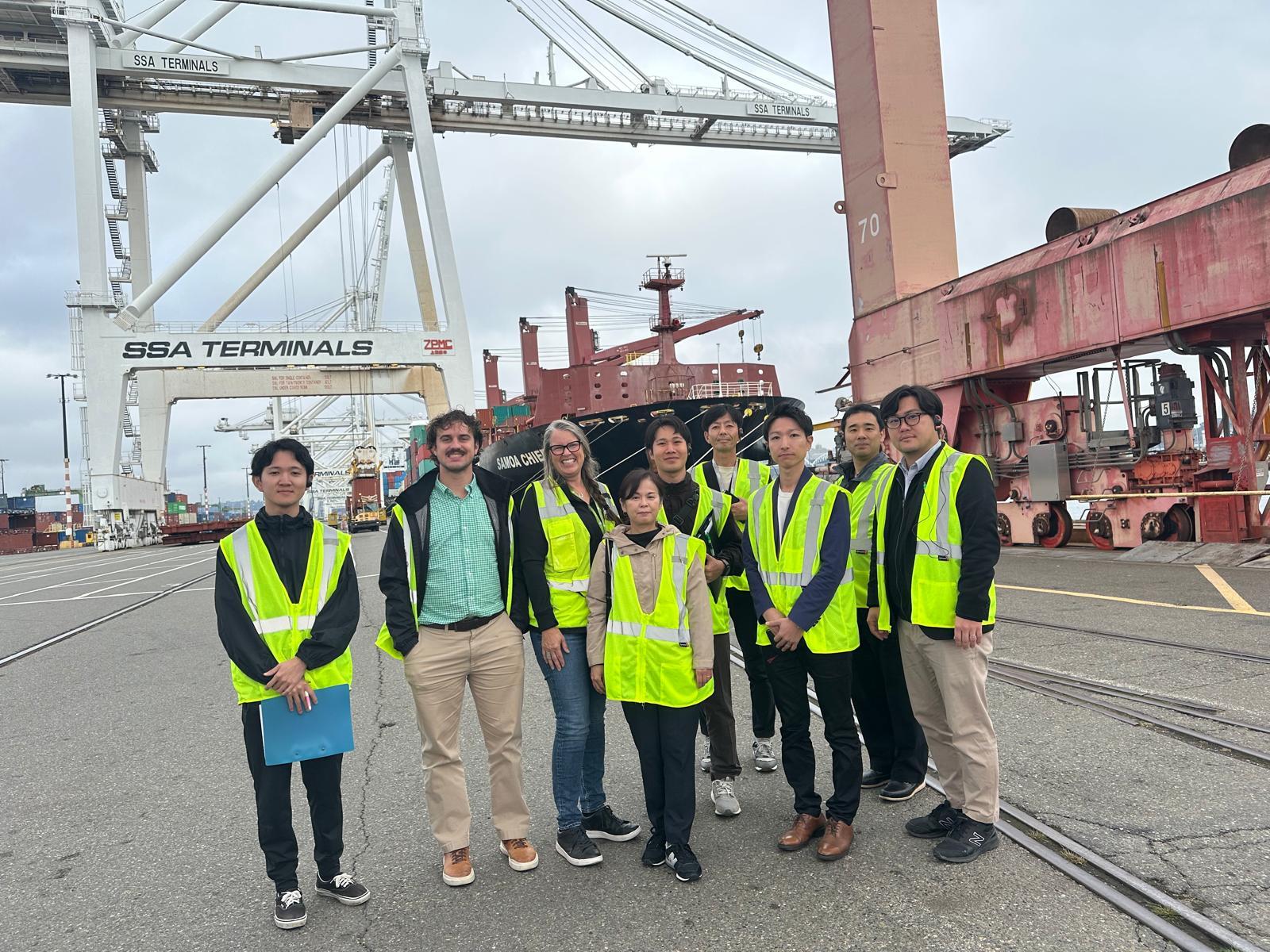
Earlier this month, U.S. Grains & BioProducts Council (USGBC) staff escorted a team of Japanese corn food and feed industry stakeholders on visits to key U.S. corn production supply chain locations and witness the current corn crop’s quality.
“This program provided general education for relatively new, less-experienced customers who examined the advantages of U.S. corn in major production areas and met with companies involved in growing, testing and exporting U.S. corn to Japan,” said Tommy Hamamoto, USGBC director in Japan, who led the group.
“The team enjoyed visiting different states to compare and contrast similarities and differences in regional farming practices that ensure crop quality.”
Hamamoto, USGBC Japan Program and Administrative Manager Michiyo Hoshizawa and USGBC Global Programs Coordinator John Owen escorted the team to its first stop at Consolidated Grain and Barge’s river terminal in Cincinnati, Ohio. After, a farm visit showed the group how U.S. corn is responsibly grown and transported to international consumers.
A jam-packed day in Denver followed, beginning with a farm tour to study the differences in growing practices between the states. Then staff at the Colorado State University’s Agricultural Research, Development and Education Center (ARDEC) welcomed the group. This experimental farming facility allows farmers to try different farming practices (nitrogen and irrigation levels, insurance, marketing, etc.) to discuss the regenerative agricultural practices helping U.S. farmers be the most productive and efficient in the world.
That afternoon, the group visited a feedlot and grain elevator for a comprehensive view of the production, transport and uses of U.S. feed grains domestically and abroad.
The last stop of the cross-country tour included visits in the Seattle-Tacoma area. The group visited an export terminal in Tacoma and the Port of Seattle to complete the showcase of the entirety of the U.S. corn supply chain.
“These key up-and-coming individuals in Japan’s feed corn industry are equipped with a higher understanding of U.S. corn supply and quality to support long-term customer relations that will continue to benefit farmers throughout the buyers’ careers,” Hamamoto said.
“Active engagement, even in mature markets, means a lot to customers and end-users, and insulates U.S. market share against competing origins.”
Learn more about the Council’s work in Japan here.