
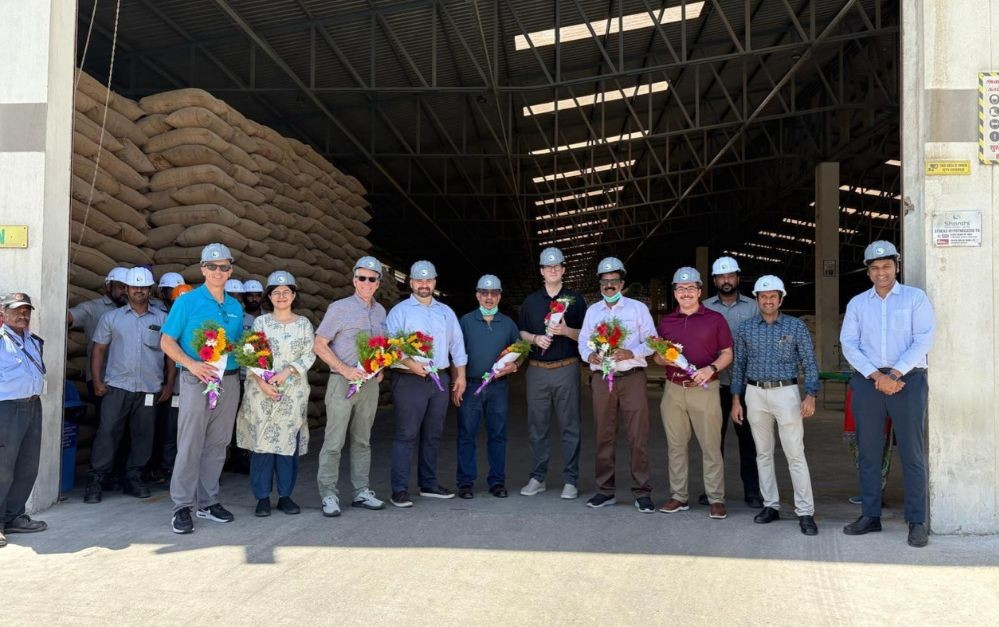
Last week, U.S. Grains & BioProducts Council (USGBC) Senior Director of Global Strategies Kurt Shultz traveled to India to build end-user interest in purchasing U.S. distiller’s dried grains with solubles (DDGS), that so far do not have market access in the country but could become a significant driver of demand for U.S. producers.
“The Indian livestock sector has faced consistent trouble sourcing quality DDGS, so stakeholders are eager to explore what international markets can offer them,” said Reece Cannady, USGBC regional director for South Asia.
“By establishing business connections and trust in U.S. DDGS’ quality, U.S. producers will be in pole position to supply users’ needs when the market opens internationally.”
Shultz joined Cannady and staff based in the Council’s office in New Delhi and USGBC members including International Feed, The DeLong Company, POET and the Iowa Corn Growers Association were in attendance to meet potential buyers and end-users.
The first two days of the agenda were dedicated to business-to-business meetings in Pune and Chennai, where participants discussed what agribusinesses are looking for in the global market and how the Council can help streamline the import process.
In Coimbatore, the delegation met with industry processors and end-users including a hatchery and feed mill to observe the current techniques and feed formulas that could be enhanced by incorporating U.S. DDGS in the future.
The roadshow culminated in Hyderabad, where the team visited several farms and had a meeting with the Compound Livestock Feed Manufacturers’ Association (CLFMA) that focused on domestic feed production and how U.S. grains can supplement demand.
“The Council has been present in India for 40 years, and we are now at a stage where we can feel incoming business with India,” said Kurt Shultz, USGBC senior director of global strategies. “In certain markets, the strategy is to play the long game and be present before anyone else.”
“India is one of those markets, and we look forward to soon enjoying a culmination of 40 years of work.”
Learn more about the Council’s work in India here.