
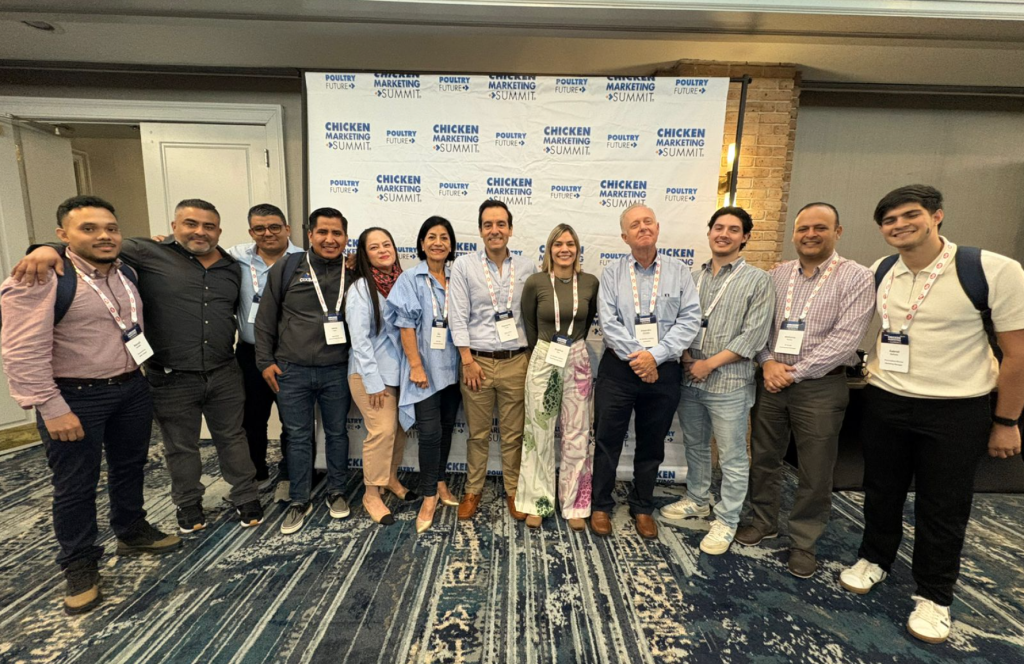
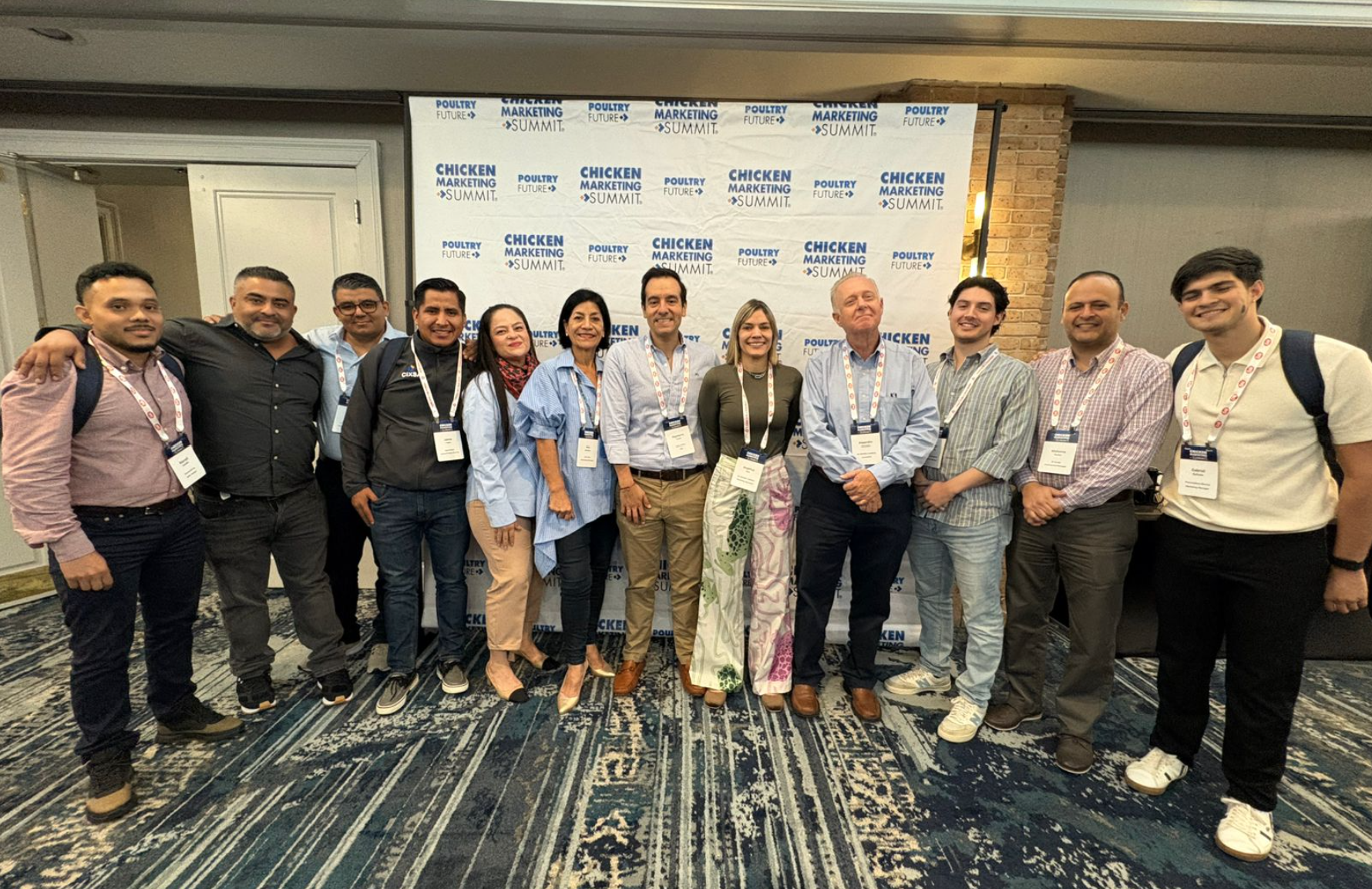
The U.S. Grains & BioProducts Council (USGBC) recently accompanied a delegation of livestock industry leaders from Latin America to the 2025 Chicken Marketing Summit, held in Savannah, GA, where they gained first-hand insights into the latest technologies, consumer trends and marketing strategies shaping the global poultry industry.
“This event took place at a time when the poultry sector continues to grow in Latin America, driven by shifts in consumer preferences, increased demand for affordable protein and the need for more sustainable production practices,” said Angélica Ríos, USGBC marketing specialist, who led the team.
“The Council strengthened its engagement with small and medium-sized enterprises in the region, exploring new opportunities to support innovation and knowledge transfer.”
Topics covered on the first day of the conference included technology and trends in both production and consumer behavior, animal welfare and products safety. Concluding seminars on balancing innovation and customer sentiment, disease containment and the state of the industry in the next decade helped attendees prepare to return to their operations ready to maximize efficiencies.
Presentations at the summit reflected U.S. producers’ approaches and domestic trends, but also factors expected to set the course for many nearby countries in the coming years. Attendees also learned how younger generations are transforming the way protein is marketed and consumed.
The group then visited Council member TransGlobe to review supply chain logistics for U.S. co-product exports, particularly high-protein products, highlighting their significant contribution to feed formulations and their current availability. Afterward, participants toured various supermarkets to observe how poultry products are marketed to U.S. consumers, who consistently remain at the forefront of trends.
“The experience underscored the importance of staying ahead of market trends and embracing innovation to remain competitive,” Rios said.
“Exposure to diverse marketing strategies, coupled with direct interaction with industry peers and U.S. market practices, allowed participants to strengthen their operations and foster growth in their local markets.”
Learn more about the Council’s work in Latin America here.